In this post I continue to reflect on Permaculture principles as process tips sharing my story of making YIELD.
This Permaculture principle (see my previous post on Permaculture) offers an alternative to industrial farming models where large areas of land are devoted to a single crop, limiting biodiversity and disrupting the wider ecosystem. You may recognise integrate not segregate in the practice of companion planting: growing different plants together so that they support each other. Flowers can attract beneficial insects or distract pests away from vegetables. Nasturtiums, for example, can be planted alongside brassicas as a “trap crop”, drawing insects away from the leaves you want to protect. A well-known example of this approach is “The Three Sisters” planting (see Figure 1), where corn, beans and squash grow together in a mutually supportive relationship.
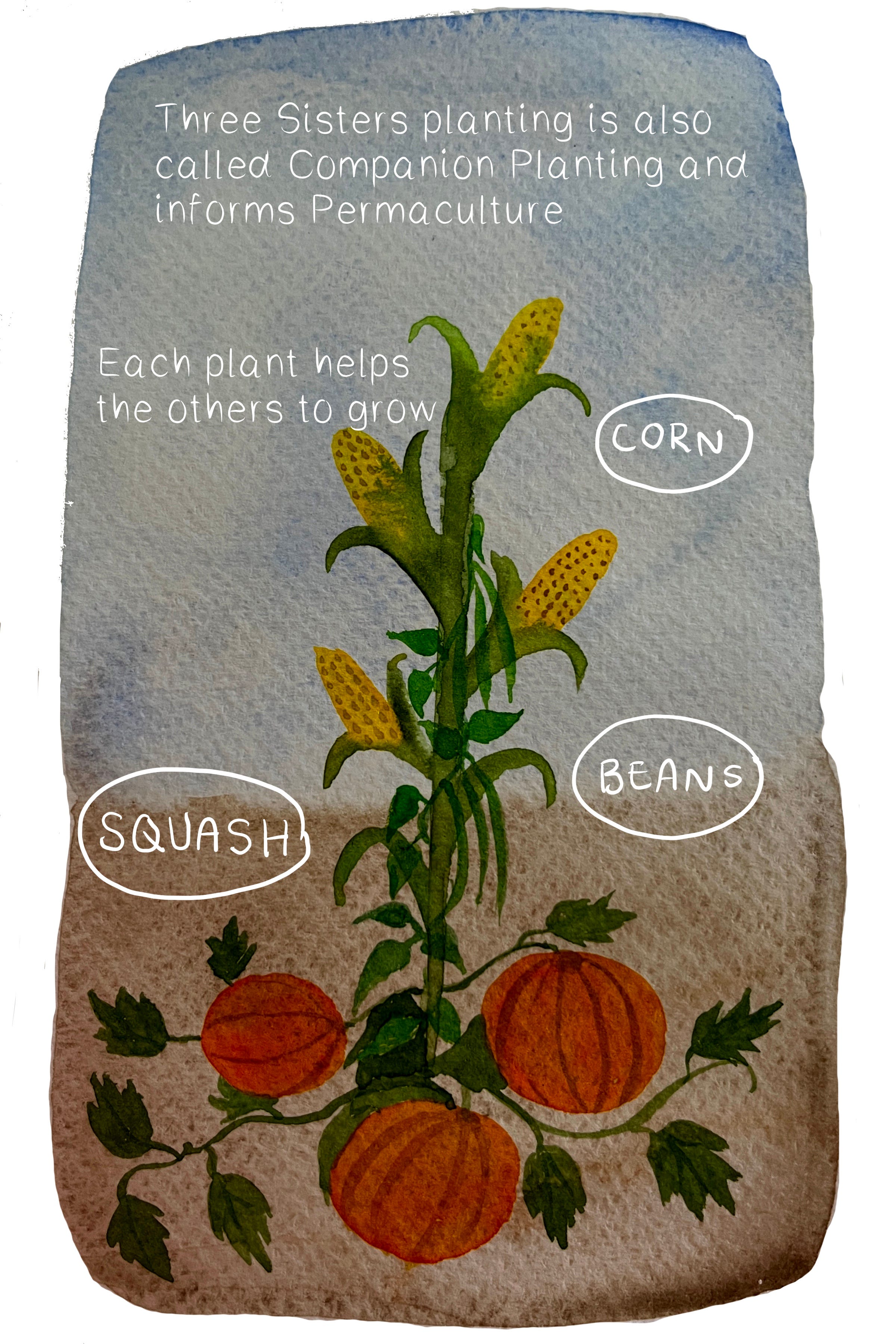
Figure 1: The Three Sisters planting
Applied socially, integrate not segregate becomes a principle that can enrich all aspects of our lives, what and how we eat, move, dance, relax, think, behave and create. It also offers a useful lens for thinking about immigration and cultural exchange. There is space to acknowledge how much innovation in Western societies has depended on contributions from people arriving from elsewhere. The telephone, for example, emerged from a history of ideas and influences that crossed borders. How depleted would our lives become if we restricted ourselves to a monoculture?
This principle has also informed my creative practice. Our creative activity needs to be integrated into everyday life, alongside sleeping, eating, working and socialising. If we spend five days a week (or more) on our “day job”, then perhaps we need to make equal space for our personal projects and creative activity, whatever form that takes and whatever scale feels possible. Five minutes, twenty minutes, an hour; the important thing is that it exists within the rhythm of daily life.
At the moment, I find satisfaction in marking the days in my diary when I have devoted time to drawing and writing YIELD. I’m still aiming for 16–24 hours a week. This isn’t a full-time practice. It allows me to earn a living, watch a solid quota of Netflix and occasionally get drunk with my friends. But it is the consistent inclusion of this work in my everyday life that validates the project to me.
Integrate not segregate also applies to the subject matter of our creative work. If a project connects with something personally meaningful, reflecting our experiences, values or beliefs it has a better chance of sustaining our interest over time.
From 2022 onwards, I read more about Permaculture: how it was developed as a system by two white Australian men in the 1970s, drawing on traditional ecological knowledge and farming practices, including those of Aboriginal Australians.
I found myself asking: isn’t this cultural appropriation?
Whilst Permaculture principles make sense to me, offering a positive alternative to industrialised farming and industrialised ways of living, my own Permaculture story began circling back towards colonial histories.
At the same time, I was exploring ideas around coincidence: what are coincidences for? How do we use them to justify our choices, behaviours and narratives? I was fascinated by all of it, but I struggled to make a coherent story that I could succinctly “pitch”.
So I disappeared down a beautiful little rabbit hole, a warren, even, that took me through the summer of 2023.
This was an ongoing work-in-progress and an early iteration of what became YIELD. My working title was “My Permacultured Life”. Looking back, I can see it was really another project, perhaps several projects tangled together. As time passed (and as I’ll document in future process posts), I went through the necessary process of letting material fall away.
It can be difficult to “park” ideas, especially when you love them. Below (Figure 2) are some spreads I still really like from an autumn 2023 draft.
Ahhh… I hope I do return to this strand in some form.
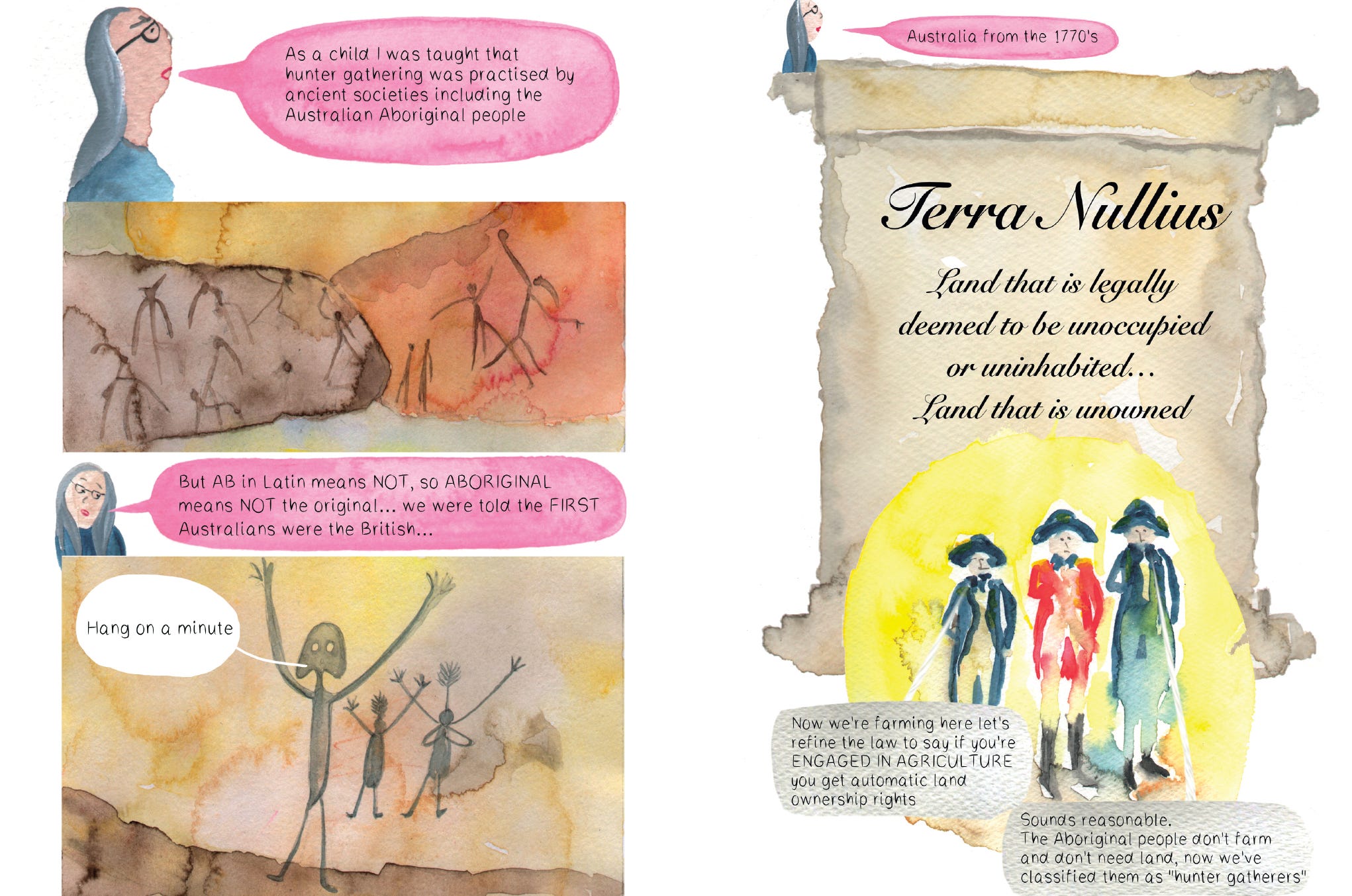
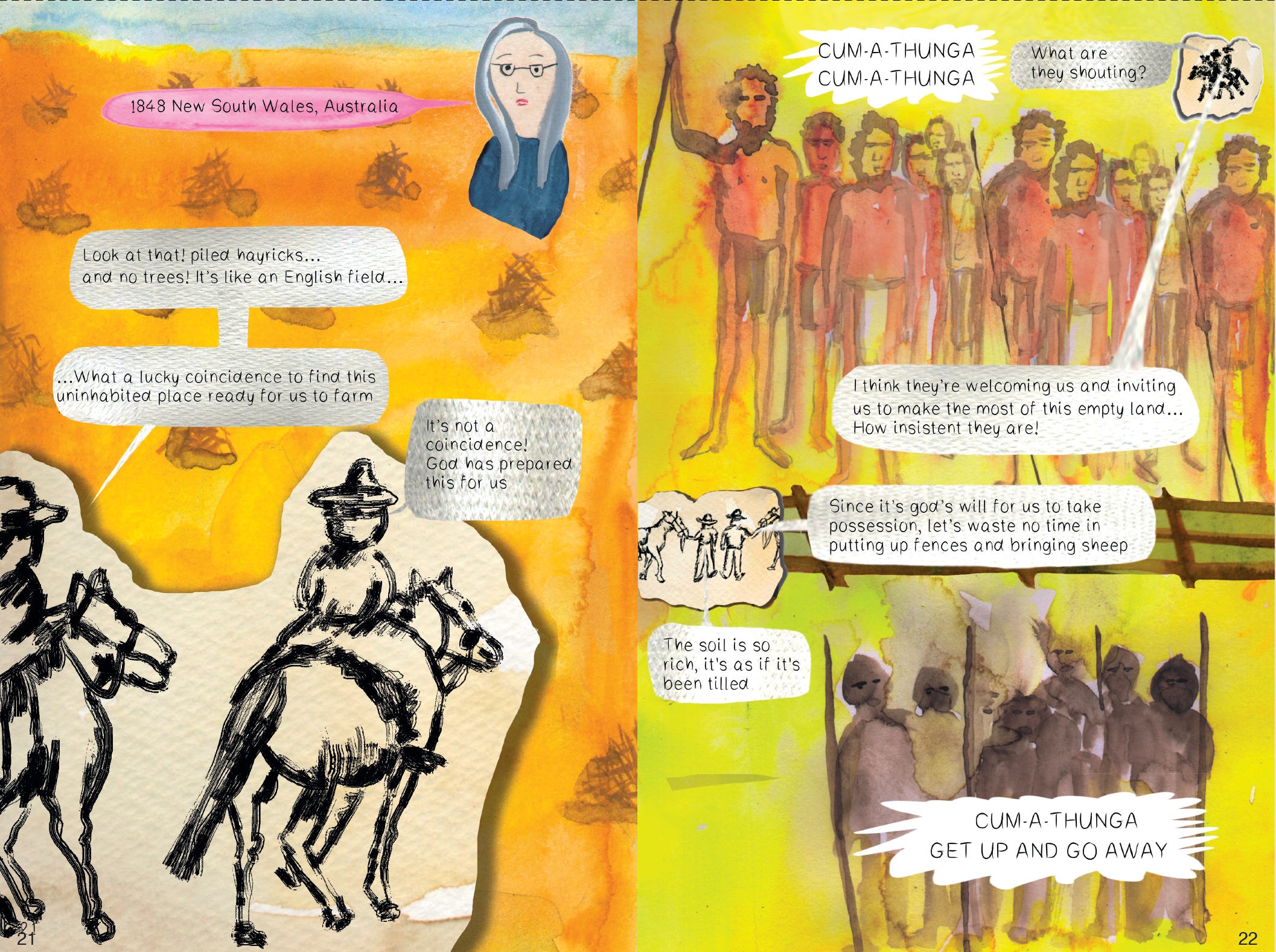
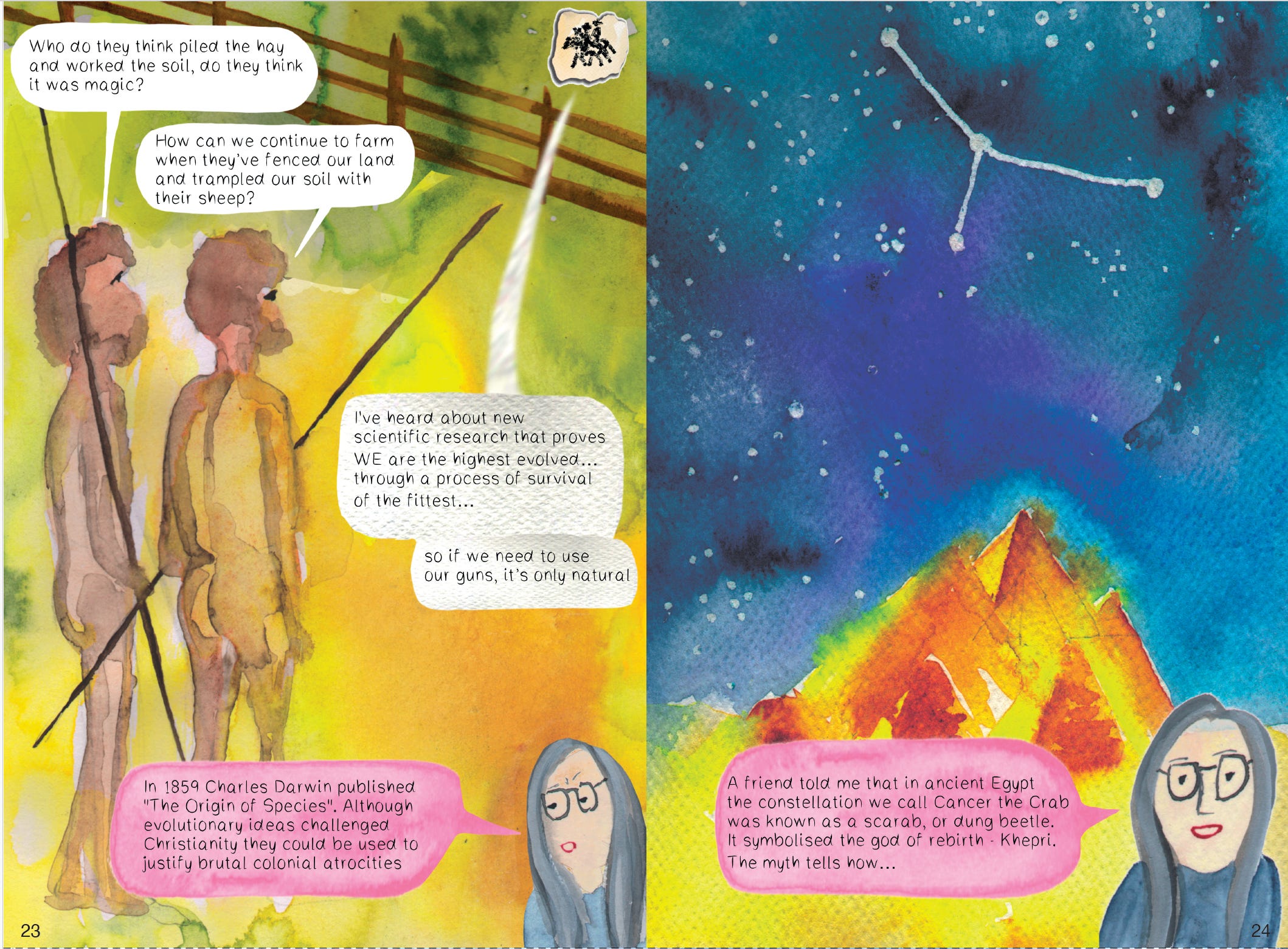
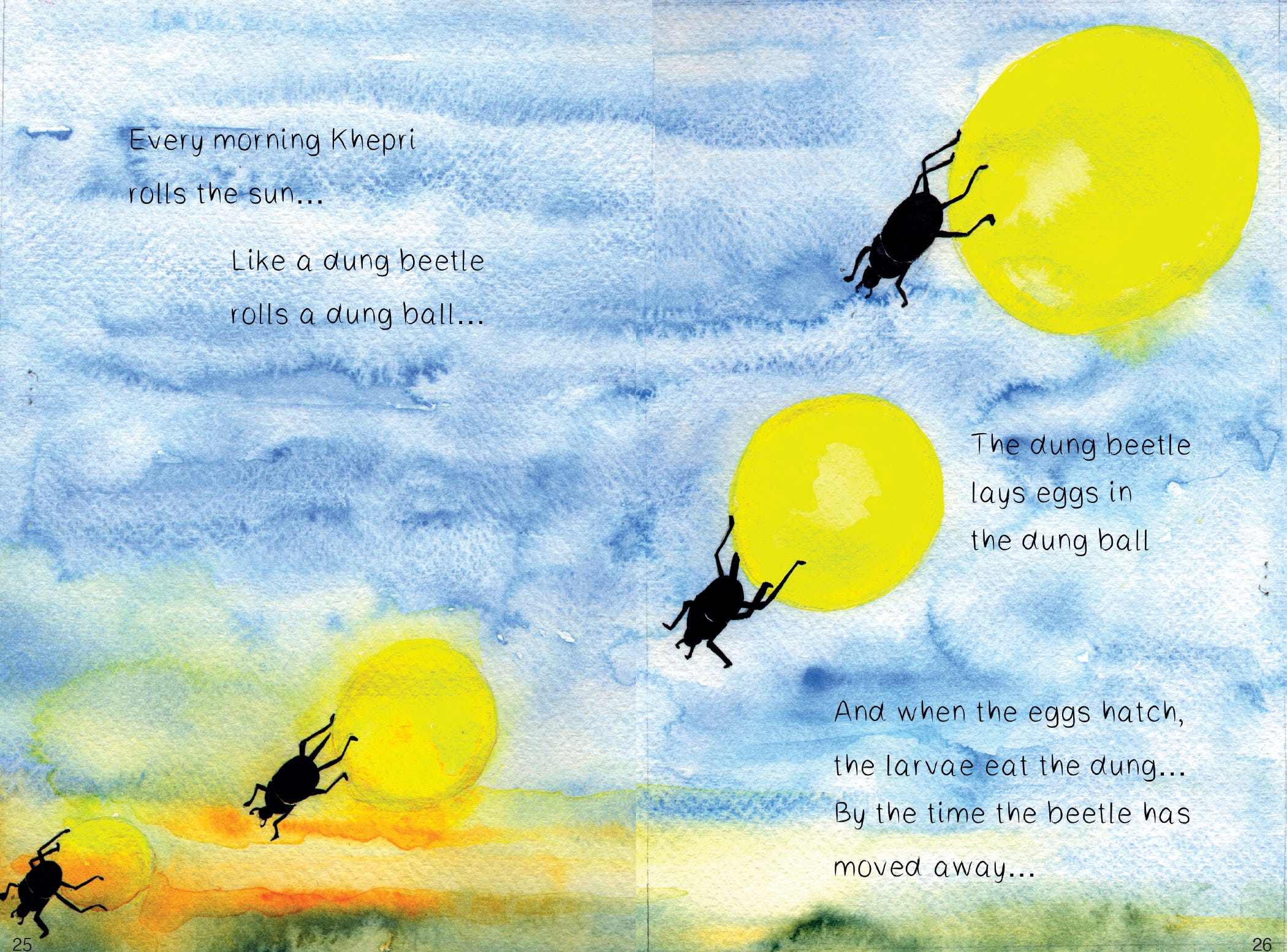
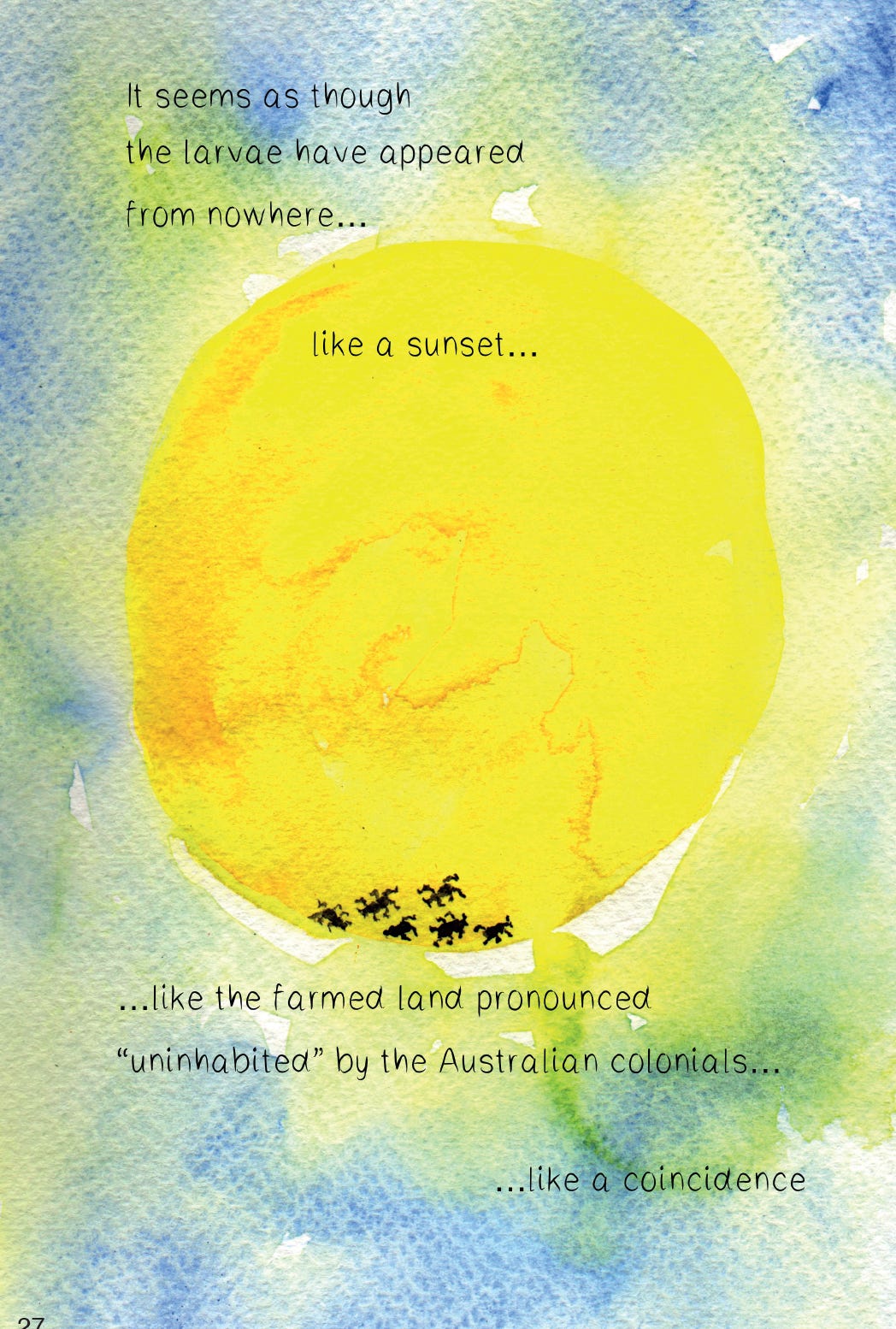
Figure 2: A section of spreads from a 2023 draft of “My Permacultured Life” (an early iteration of YIELD)
NEWS
SPACETIME: AWKWARD ;-)
I will be at the gallery on Thursday 18th June and it would be great to see you if you’re anywhere near.
Sat 13 June 12-5pm
Sun 14 June 12-5pm
Thurs 18th-Sun 21 June 12-5pm
The Old Grocery
48 Wivenhoe, Colchester CO7 9AZ
Ben Coode-Adams, Cailin Cummins, Sophie Giller, Tilly Hawkins, Sara Impey, John Plowman, Sally Plowman, Freddie Robins, Nicola Streeten
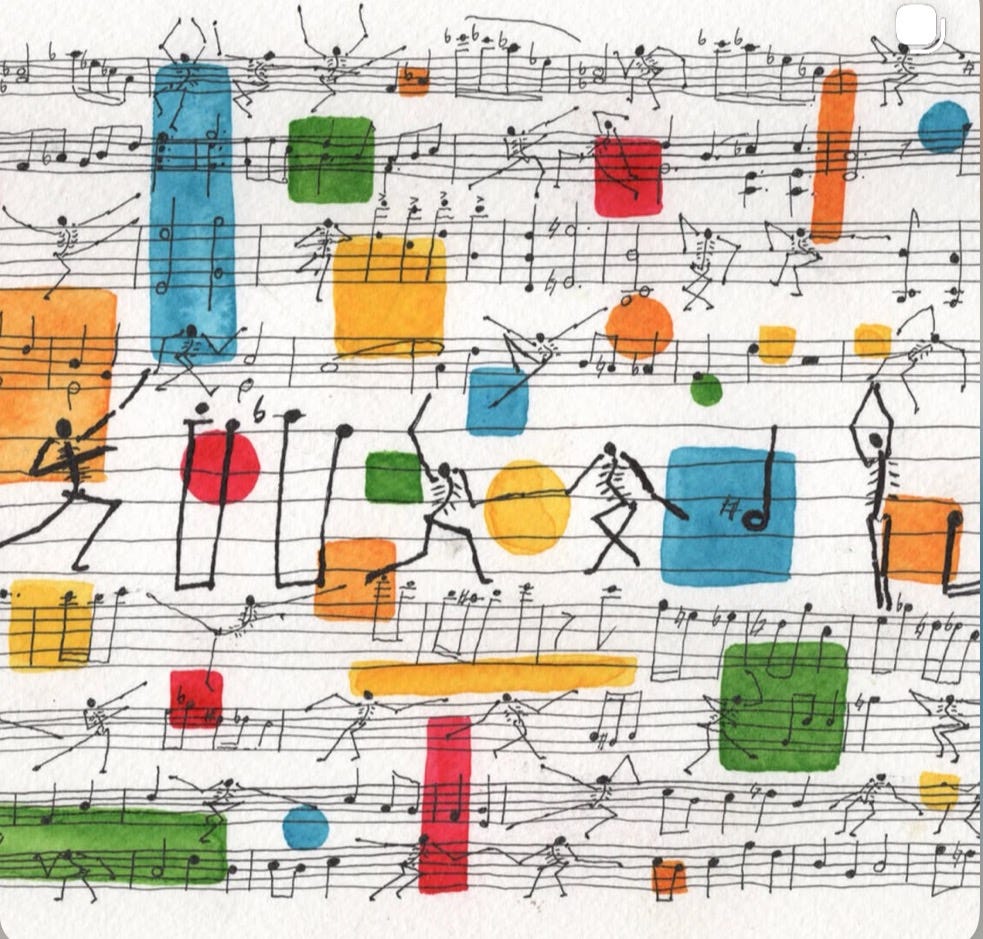
We’re all gonna die, so we may as well dance
This is one of three pieces I’m exhibiting in Spacetime: Awkward;-)
They are part of an ongoing series of drawings I’m making for inclusion in YIELD and as standalone artworks. The musical notes are taken from the musical score composed by my uncle at Black Mountain College for a ‘total theatre’ production of Danse Macabre, inspired by Hans Holbein’s woodcut prints of the same title. The dancing skeletons reference this history. The background colours and shapes are a nod to Bauhaus, which had a significant influence on the Black Mountain College approach, largely from Anni and Josef Albers who lived and taught at Black Mountain College from the first year (1933). Xanti Schawinsky, another Bauhaus alumni was also at Black Mountain College and produced the production of Danse Macabre there, performed in 1938.
Watercolour and pen on paper
8 x 6 inches
Framed: £275
CLOAKROOM LAUNCH
This is the project John and I have been working on. If you can make it along to the launch, we’d be overjoyed to welcome you.
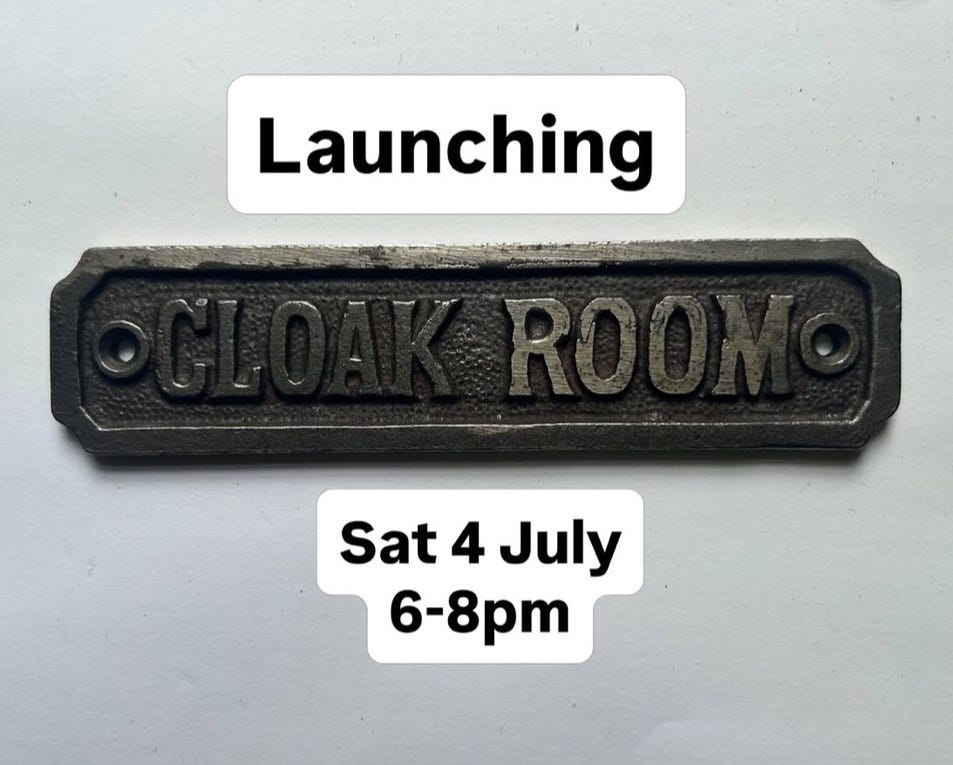
Saturday 4 July 6-8pm
Church Rooms, Camping Land
Swaffham, Norfolk PE37 7RB
CLOAKROOM is an artist-led space in a historic building in Norfolk, UK, initiated by The Grange Projects. It hosts a curated programme of public exhibitions, talks, and events, facilitated by artists John Plowman, Dr Nicola Streeten, and Sally Plowman.
Cloakroom’s core aim is to create a space where artists can explore, interrogate and experiment with what happens between inspiration and production within creative practice. It seeks to make these often-invisible processes visible across a range of disciplines and activities. This approach extends the ethos of The Grange Projects’ residency programme, which has been running since 2022.
DIAGRAPHIC 4 JULY - 29 AUGUST 2026
Emma Biggs, Ben Coode-Adams, Lee Grandjean, Marcia Mihotich, John Plowman, Freddie Robins
Opening Event Saturday 4 July 6-8pm
Exhibition open every Saturday 10am - 1pm between 11 and 29 July.
ACKNOWLEDGEMENTS
My substack posts and the work towards my final draft of my graphic novel YIELD are supported by an Arts Council England lottery project award