

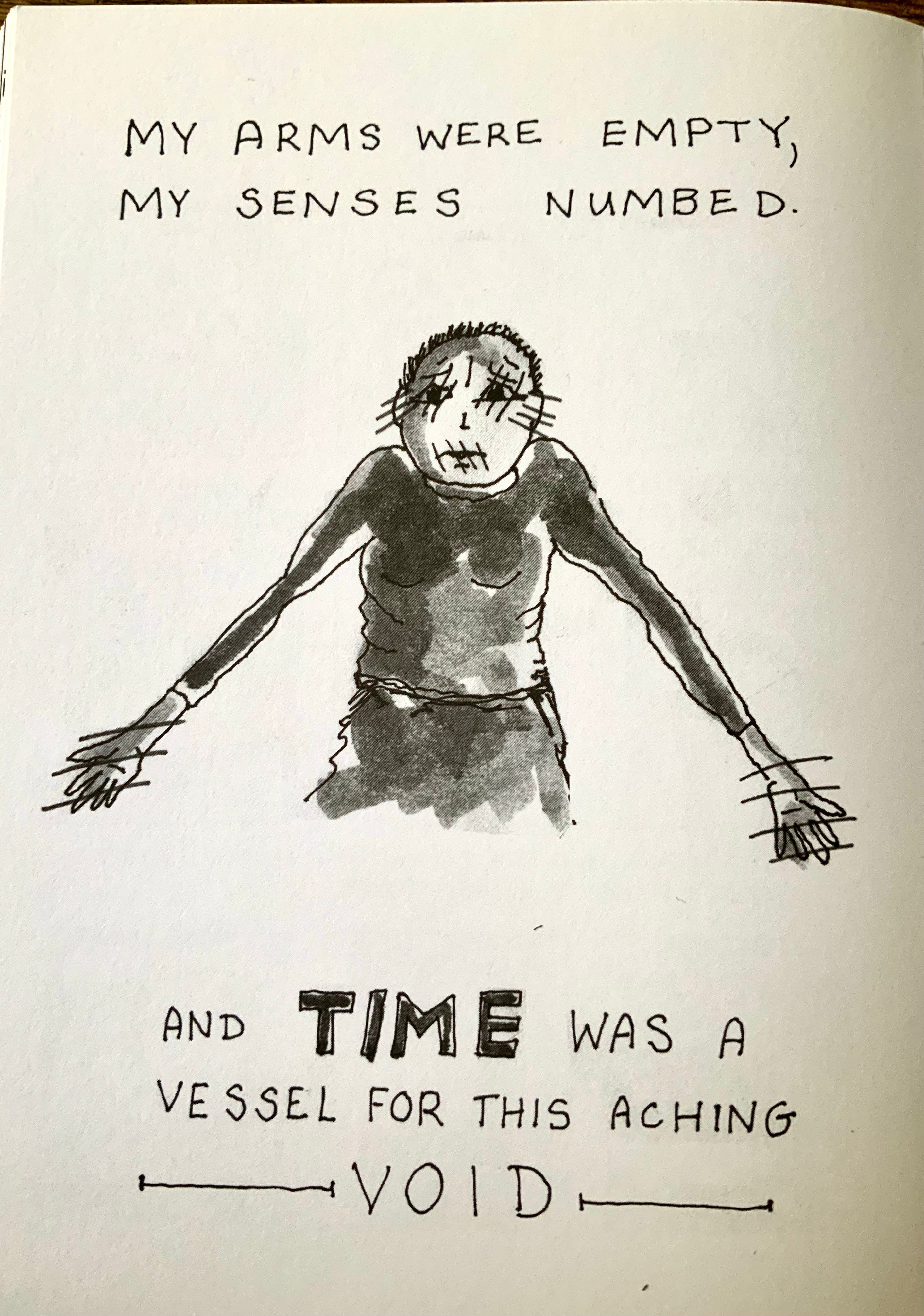
Figure 1: A page from Billy, Me & You (2011)
OK, so you decide to ‘just do’ your project, then what?
In this post I continue reflecting on my ongoing process.
3 TIPS
1) Prioritise TIME
The one point in my adult life when I had time was after the death of our first child Billy (Figure 1). Returning to drawing was my way of filling the emptiness, the void, the time. Drawing offered me balm for the pain of my grief. This concentrated drawing time turned into the reason I’m here, decades later writing about how I don’t have enough time to draw!
As time passed, a lack of time returned and I’ve never had enough since, are you the same?
This year I decided the problem of lack of time can become the solution through prioritising. Since January I’ve followed Raymond Aaron’s framework in approaching my studio practice.
MTO means Minimum Target Outrageous: a Minimum you must hit, a Target you aim for, and an Outrageous goal that stretches your thinking and actions beyond what feels comfortable. I wrote about it in my essay here
I set my minimum at 4 hours studio work on 3 days per week, so 12 hours a week total. It’s not so much about the time, it’s about the commitment to keeping going. I’m surprised at how hard it’s been, surprised I’ve not hit my target more than about twice, pleased I’ve kept it up, and VERY PLEASED with the results in my project and in my improved sense of contentment. I recommend trying this. Early morning suits me, to begin my studio session at 8am. By lunchtime I feel satisfied and ready to move to my paid work. For you it may be staying up later.
The point is the shift in perception of time as the problem.
Which leads to my next tip
2) The PROBLEM is the SOLUTION
In 2022, shortly after we moved to The Grange in Norfolk I took a Permaculture Course. Coincidentally the UK Permaculture community was already familiar with The Grange because the 10-acre garden here had been redesigned as a permaculture site about ten years earlier by the owners’ daughter Sophie and spouse.
“Permaculture” is a combination of ‘Permanent’ and ‘agriculture’. Based on the writings of co-founders Bill Mollison and David Holmgren Permaculture can be defined as a design system that creates self-sustaining agricultural and human environments by mimicking the patterns, diversity, and resilience found in natural ecosystems. Bill Mollison summarised the approach into twelve principles. Some of these I will incorporate into my tips in my process series, starting with my all-time favourite
The Problem is the Solution
Here’s an example. When we moved to The Grange I launched myself enthusiastically into gardening (Figure 2).
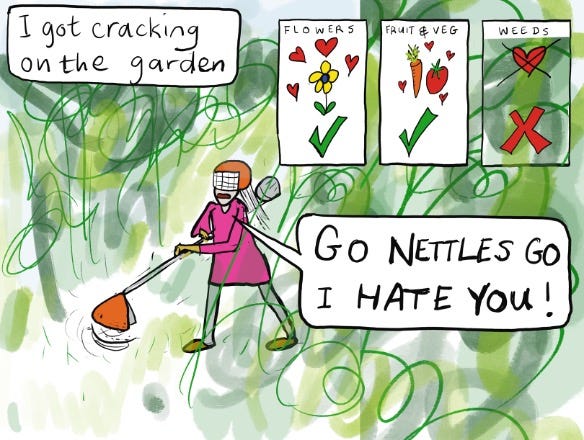
Figure 2: Early gardening at The Grange
If I applied the permaculture principle, I realised the PROBLEM of nettles could be the SOLUTION. I used the leaves to make plenty of fertiliser to enrich the soil (Figure 3). I adjusted my binary thinking of weeds (bad) versus plants (good).
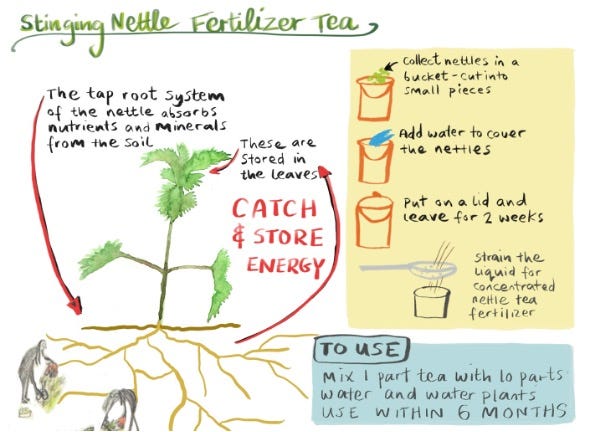
Figure 3: Applying Permaculture Principle to Nettles
My interest was not really in the application of these principles to gardening, but in how we can interpret them through a social lens and apply them to our lives.
Already the problem of having to sell and leave our Lincolnshire home had become the solution as I wrote about in my first process post.
I decided these Permaculture principles could provide a structure for a narrative.
One of the core design principles is ‘Obtain a Yield’ and I later took YIELD as my title. At this stage (2022) my working title was “My Permacultured Life”. Figure 4 shows a page from the earliest iteration of YIELD, structured around Permaculture principles.
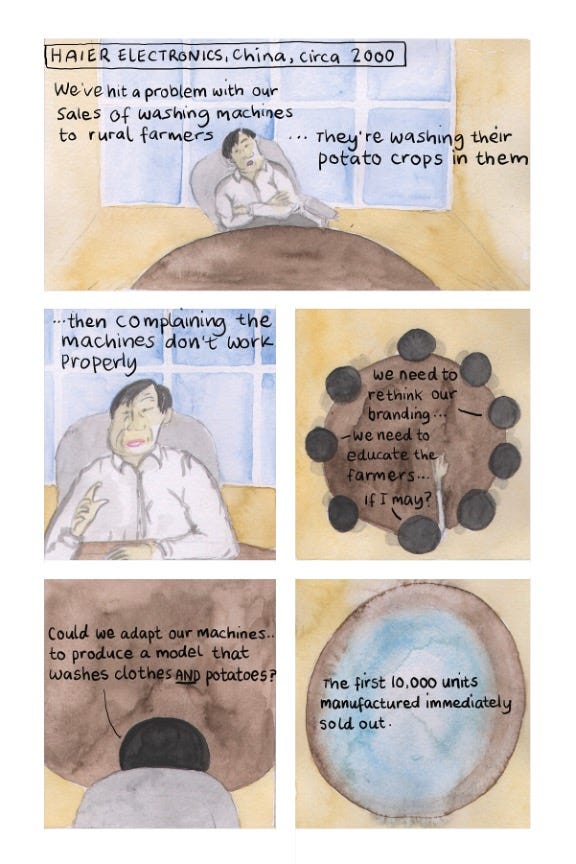
Figure 4: Page from first iteration of YIELD (2022)
3) KEEPING GOING
My sister gifted me some small dumbbell weights to use to increase my arm strength. She’d been so amazed at how they’d improved her life from just five minutes a day of exercises that she was keen to share her discovery. I tried the five minutes a day for a week and was astounded at how much easier lifting became, how much stronger my arms and whole body felt. All I’d done is commit to continuity in an exercise routine.
It’s the same with creative practice. A little everyday keeps your creative muscle toned and makes it all easier to keep going.
In 2022 during our first year living here at The Grange in Norfolk, I didn’t have a specific personal drawing project, and I had lots of facilitation work commitments I wanted to focus on. To keep up my practice I made daily observational watercolours of flowers I’d picked (Figure 5). This was also a great way to learn the plants and flowers in a garden that was new to me.
I’ve since used some of those small pictures in other works, in line with my tip in my first process post to keep everything.
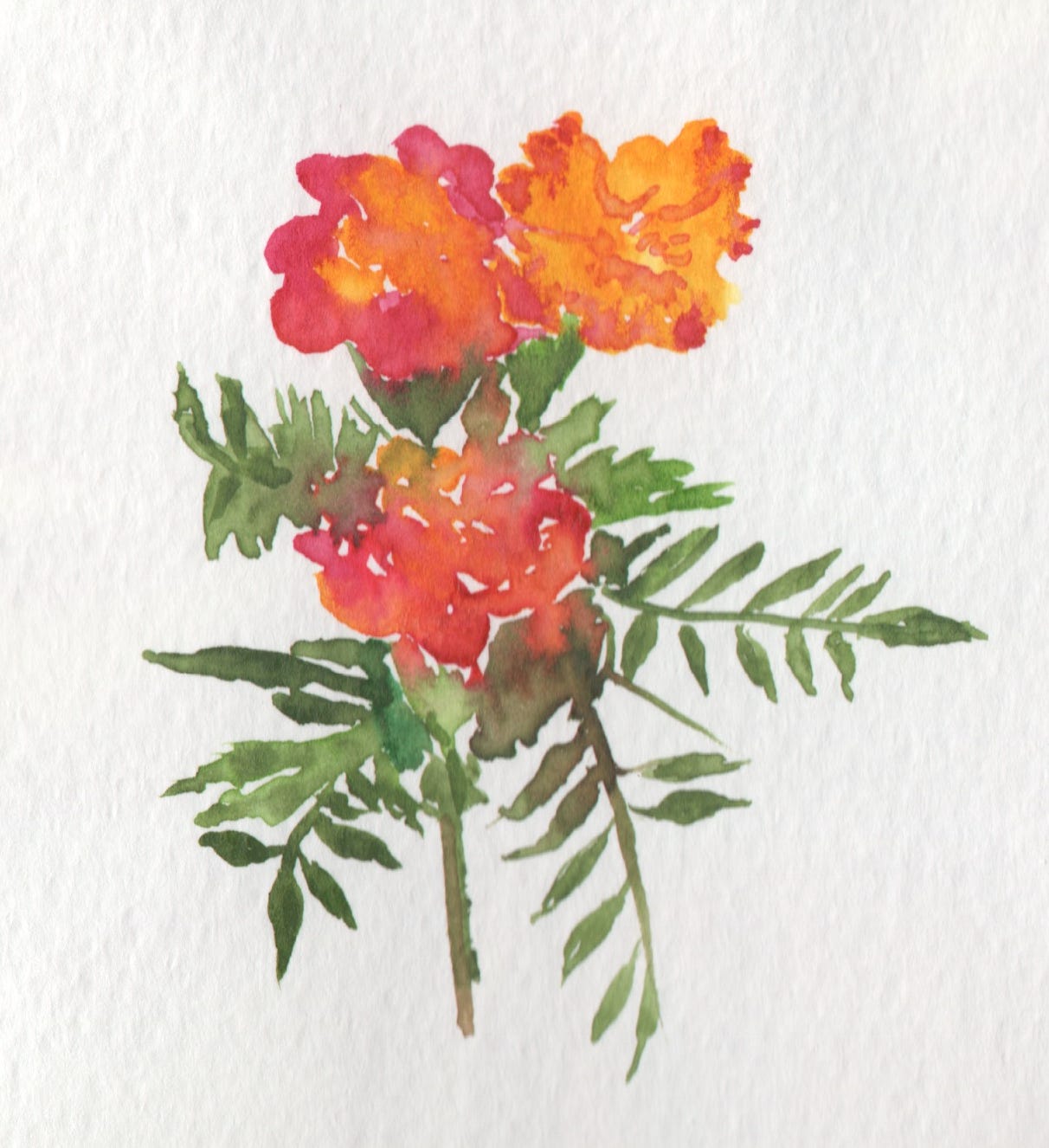
Figure 5: Watercolour from The Grange Garden (2022)
A note on COINCIDENCE
I intended to continue the coincidence strand I introduced in my first process post, but except for the permaculture coincidence here I’ve slightly skipped a bit…to be continued…
Thank you for joining me here and have a nice rest of May
love from Nicola x
But before you leave, just quickly check out this news item below
Other News: Launch of CLOAKROOM
Below are my clips of ongoing renovation updates at Church Rooms, Swaffham.
SAVE THE DATE: 4 July 2026
With John and our daughter Sally I’m looking forward to introducing a new strand of creative activity with the opening of CLOAKROOM at Church Rooms
with our inaugural exhibition
DIAGRAPHIC 4 JULY - 29 AUGUST 2026
Emma Biggs, Ben Coode-Adams, Lee Grandjean, Marcia Mihotich, John Plowman, Freddie Robins
at
CLOAKROOM
Church Rooms, Camping Land, Swaffham, Norfolk PE37 7RB
Opening Event: 4 July, 6-8pm, all welcome.
RENOVATION UPDATE CLIPS
Church Rooms Renovation 1: The work begins, Winter 2025
Church Rooms Renovation 2: Summer/Autumn 2025
Church Rooms Renovation 3: Winter 2025
ACKNOWLEDGEMENTS
My substack posts and the work towards my final draft of my graphic novel YIELD are supported by an Arts Council England lottery project award

Going to relook and take on some of your tips 👍🏽. Loving your church rooms updates 💗and love you 💗💗
Love this about the problem is the solution and the potato washing machine. Empowering read, well done on your weights.