
AFFORDING FREEDOM
I’ve been thinking about freedom.

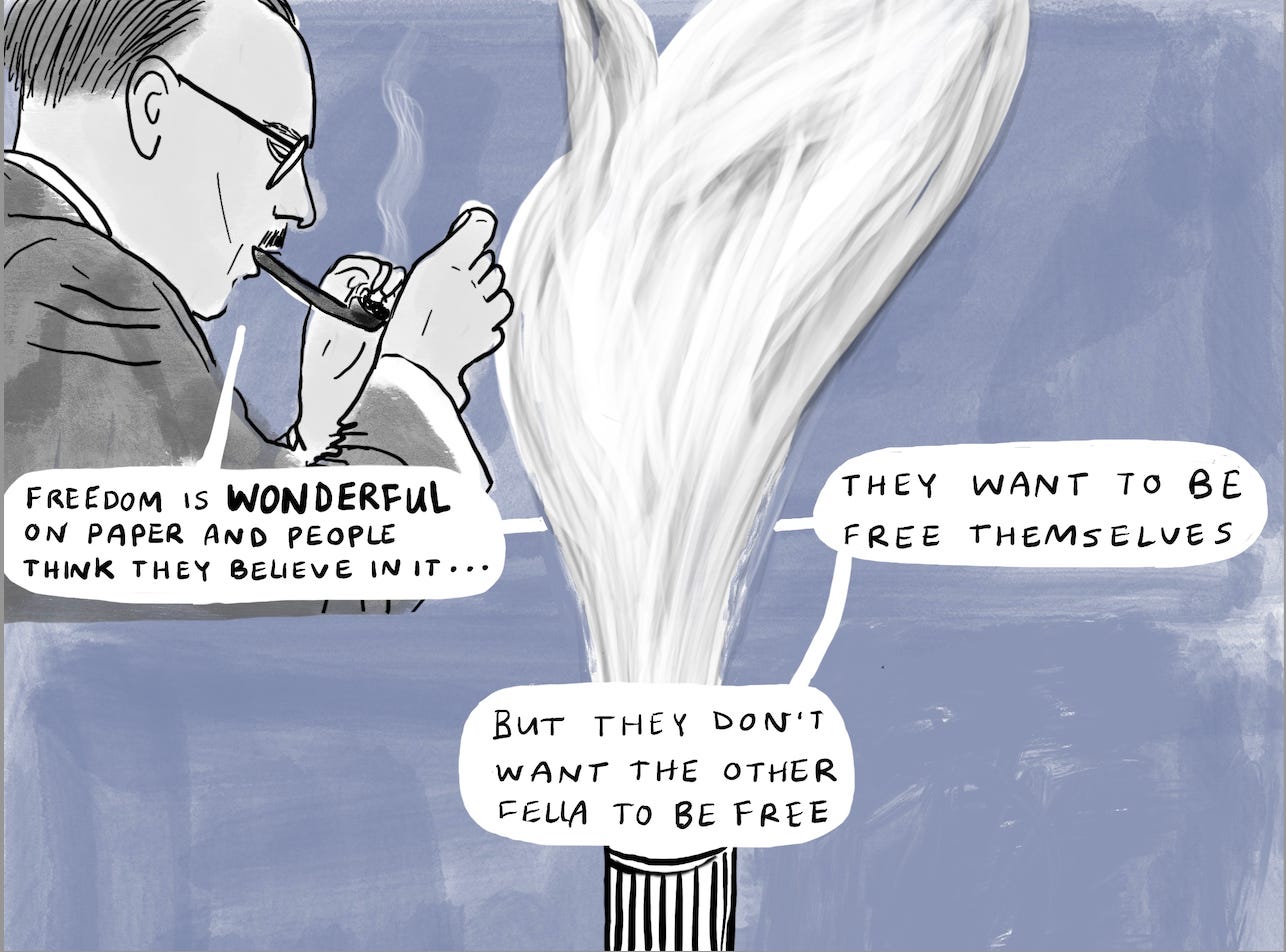
Fig 1 From an early draft of YIELD, quoting the founder of Black Mountain College, John Rice
My graphic novel in progress, YIELD, is set at Black Mountain College, an experimental community in North Carolina that, from the 1930s to the 1950s, championed freedom. Freedom of thought and expression. Freedom to learn beyond the constraints of the American education system. A belief in the arts as essential.
But what does “freedom” really mean?
Freedom is the ability to do what we want, to speak, move, and choose our path.
Liberty is what makes that freedom real. It is the laws, structures, and social norms that protect our ability to act. You might feel free to say something, but you only have liberty if that speech is protected and you will not be punished for it.
Here, I am thinking about freedom rather than liberty. My concern with how the word is used today is this. We often treat it as something personal, something I have.
But the freedom of the individual, however appealing, is not enough.
A personal memory
When I think of a time in my life when I felt free, I return to 1987.
I am twenty four and heading to India. I have been living at home, saving enough to support several months away. I can afford a certain kind of freedom. Cheap hotels, restaurant meals, travel to places of interest with other Western tourists. Above all, I can afford time. I have packed a sketchbook to write and draw.
It was one of the most transformative chapters of my young adult life.
My journey began in Delhi with three friends. We boarded a train to Kerala, travelling the length of the country over three days and nights. Outside the window, the landscape was rich and fertile. It was hard to reconcile such visible abundance with the reality of hunger. How could a land so capable of producing food still contain such extreme poverty?
This question threaded through our card games and conversations. My friend John, studying for a master’s degree at Jawaharlal Nehru University, shared an article with us. I cannot recall the author, but the argument has stayed with me.
It went something like this.
Large institutions like the World Bank supported the expansion of farming in India by funding irrigation, fertilisers, seeds, and machinery, much of it imported from Western countries. This created dependency on external systems and encouraged a shift toward industrial, large scale cash crops rather than local subsistence farming. At the same time, global trade pressures meant India often had to export crops to service debt, while importing food to meet domestic shortages. The result was a deepening of inequality and food insecurity, despite the country’s capacity to produce abundance.
Slowly, something became clear to me.
My freedom depended on other people not being free.
I could afford to move, to observe, to leave. Yet that freedom stood in stark contrast to the lives around me. The poverty I witnessed was not accidental or isolated. It was connected to global systems that benefited people like me.
As Adrienne Rich writes,
“Where capitalism invokes freedom, it means the freedom of capital.”
One of the highlights of the train journey was the bustle of food and chai vendors boarding at station stops. They competed for sales, working tirelessly, yet often struggled to earn enough to feed themselves. They could not afford the kind of freedom I casually exercised in my spending.
How can I feel comfortable when others struggle to eat?
How can I be free if those around me are not?
Freedom, it turns out, is not something we achieve alone.
As Sara Ahmed puts it, it is about
“creating the conditions so we can participate in each other’s freedom.”
Freedom is something we practise together.
When I returned to the UK, it was to a growing ideology of the self.
In 1987, Susan Jeffers published Feel the Fear and Do It Anyway, one of the first major self help books in what has since become a vast and lucrative industry. Its ideas aligned neatly with the economic policies of Margaret Thatcher, filtering into everyday life through glossy magazines and television advertising.
We were told that if we took responsibility for ourselves, we could achieve anything, and that this was what it meant to live freely. Language shifted accordingly. We were encouraged to self direct, self determine, self care, and become self made. Even now, despite my ambivalence, I return to Feel the Fear as one might to a box of chocolates, drawn in against better judgement.
Advertising reinforced the message that freedom could be purchased. The 1988 Nike slogan Just Do It did not so much sell shoes as sell a feeling. Empowerment, autonomy, individuality. The implication was clear. I am free if I can afford it. But the workers producing those shoes, often in non Western countries, could not afford that same freedom.
Freedom became equated with individual success, measured in financial terms and framed as personal responsibility. The idea of meritocracy took hold. If I succeed, it is my achievement. If I fail, the fault is mine.
Yet there is another version of freedom, one rooted in the collective. It is less comfortable, less straightforward, and often less immediately rewarding. But it is the way to shape a world that is a better place for everyone.
Freedom as a shared practice
How do we move towards this kind of freedom?
In an earlier essay, What’s the Point?, I wrote about how community gives meaning to our lives. I want to suggest now that freedom is inseparable from community. To work with community at any scale is to work towards freedom. Black Mountain College itself was built on this principle. A collective experiment, created and sustained for something beyond individual gain.
Protest offers another, more visible example.
A personal memory
On 15 February 2003, I travelled to London with my spouse John and our five year old daughter, Sally, in her pushchair, to march against the Iraq War. More than a million people joined the Stop the War protest, the largest political demonstration in UK history. Across the world, millions more gathered in opposition.
Philosopher Judith Butler describes this as the “collective assembling of bodies”, the physical gathering of people in shared space as a form of political power.
I remember the feeling vividly.
I was part of something bigger than myself, and it was part of me.
Effortless, connected, shared.
A month later, the UK and the US invaded Iraq, leading to the deaths of hundreds of thousands of people. The protest did not stop the war. But it mattered. It was an expression of collective will, a refusal to be passive, a refusal to surrender hope.
Rebecca Solnit describes freedom as the
“autonomy to risk having hope,”
even when hope might fail.
Towards a different definition
If our individual freedom only has value when it includes the freedom of others, then we begin to move towards a more generative understanding of the word.
But this is not a comfortable position. It asks more of us. It unsettles the ease of thinking of freedom as something we possess. I will continue exploring this next month.
IN OTHER NEWS
I am very pleased to share that I have been awarded an Arts Council England Lottery Project Grant to complete YIELD for a scheduled publication in November 2026.
As part of this, I will be sharing process posts here, alternating with these essays. So my Substack uploads will now fortnightly.
Thank you for reading and for joining me on this journey.
Nicola x
Hi Nicola. Thanks for posting this. I can relate very strongly to many of these events and theories. The irony of post colonial travel and the self-help only available to those who can help themselves are painful thorns in the side of questions around who has freedom. I like the way you have linked this to the ideas around community as this seems more important than ever. I look forward to your next post. Mike